

Nine seasons of walking the loop at an Ozarks state park in northern Arkansas taught me that dutch ovens split campers into two camps just as clean as camping chairs do. There's the bare cast iron camp dutch oven, three legs and a flanged lid built to sit right down in hot coals, and there's the enameled dutch oven, the kind with a smooth glossy coating that most people already own for the kitchen at home. I watched both styles show up at fire rings across all forty of my nightly site checks, and I've cooked out of the Lodge Cast Iron Camp Dutch Oven at my own host site outside my 22-foot travel trailer often enough to have a strong opinion about which one actually belongs at a campsite.
The short answer, if you don't want to read the whole comparison: for cooking directly in and over campfire coals, the bare cast iron wins, and it isn't close. For cooking on a stovetop or in a home oven, the enameled version wins just as clearly. This isn't really a battle between a good product and a bad one. It's a battle between two tools built for two different jobs, and the mistake I've watched campers make on my loop, more than once a season, is bringing the kitchen tool to the campfire job.
| Spec | Lodge Cast Iron Camp Dutch Oven | Enameled Dutch Oven |
|---|---|---|
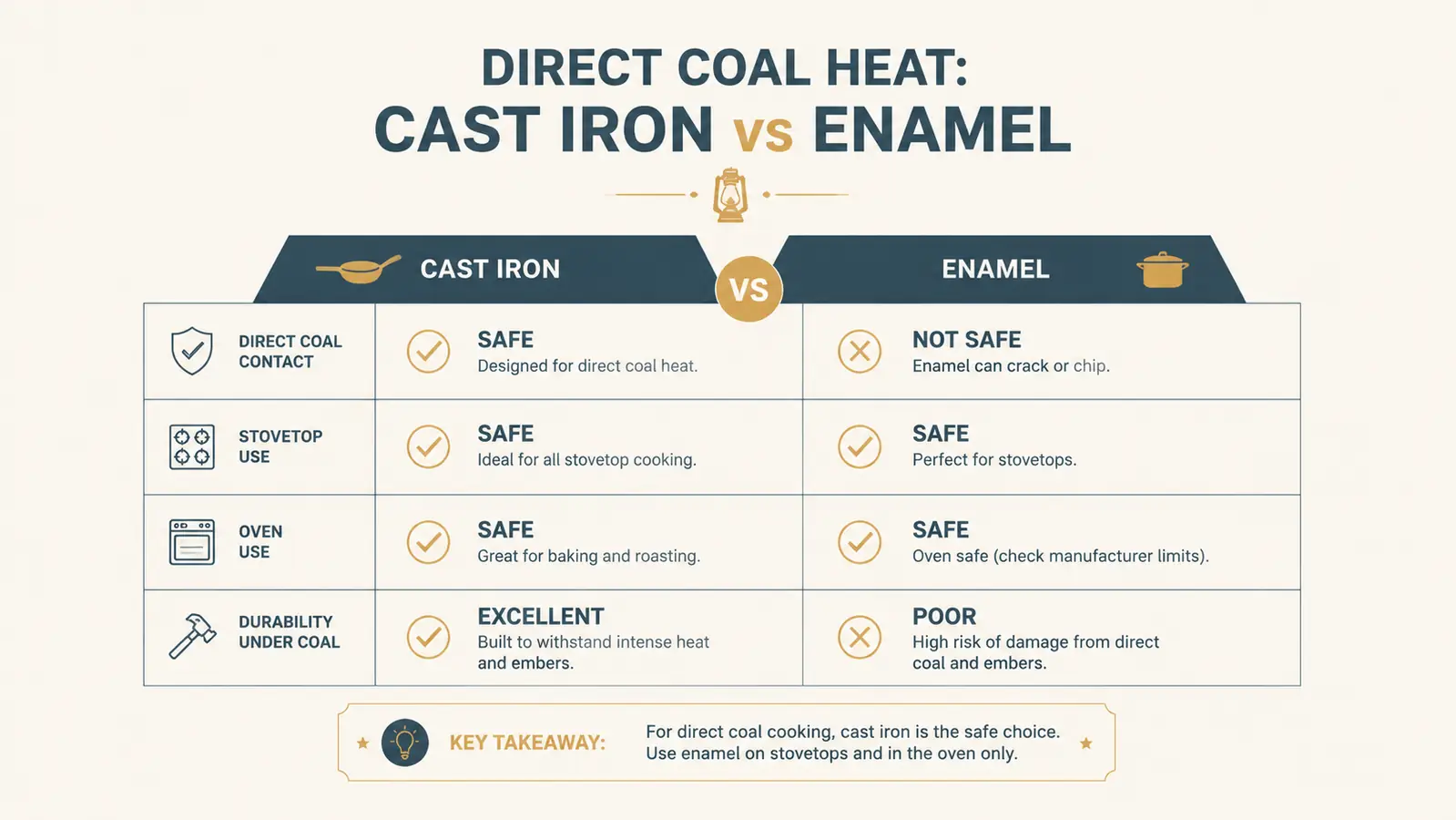
| Direct Coal Contact | Built for it, safe to set directly in hot coals | Not rated for it, direct coals can crack or craze the enamel |
| Legs and Lid Design | Three short legs lift it off the coal bed, flanged lid holds coals on top | Flat bottom and domed lid, made for a stovetop burner or a home oven rack |
| Thermal Shock Resistance | Handles going from a cold truck bed straight into hot coals | Prone to cracking or crazing from fast temperature swings |
| Cooking Surface | Pre-seasoned cast iron that builds a better natural nonstick with use | Smooth enamel coating, nonstick from the first use, no seasoning needed |
| Acidic Food (tomato sauce, wine-based dishes) | Can pick up a metallic taste unless the seasoning is solid | Handles acidic food with no metallic taste at all |
| Weight (6-quart size) | About 9 and a quarter pounds | Comparable sizes commonly run 13 to 15 pounds with the coating and heavier walls |
| Chip and Crack Risk | Seasoning can chip off a bare spot, but the iron itself doesn't crack from a hard bump | Enamel chips and cracks if dropped on rock or knocked against another pot |
| Cleaning | Hand wash, dry it right away, re-oil the cooking surface | Wipes clean easily, dishwasher safe on most models |
| Home Kitchen Use | Works, but it's heavy and needs seasoning upkeep even indoors | Built for it, goes from stovetop to oven to the dinner table looking good |
How I Judge Dutch Ovens After Nine Seasons of Campfire Cooking
I checked roughly forty occupied campsites a night from April to October, and dutch ovens were one of the pieces of gear I paid the most attention to, because a good one meant a family was eating a real dinner and a bad match meant somebody was about to have a bad night. I've watched an enameled dutch oven get set straight into a bed of coals by a camper who didn't know better, and I've heard the crack from three sites away when the thermal shock hit. I've also watched a bare cast iron dutch oven get left out in a week of Ozark rain, rust over, and come back to life with nothing more than a scrub pad and a fresh coat of oil.
The way I judge cookware isn't by how it performs in a single meal, it's by how it holds up over a whole season of the actual conditions campers put it through, and campfire coals are a different kind of abuse than a gas stovetop ever will be. Coals aren't an even, controlled heat. They're hot in some spots, cooler in others, and if you're baking a cobbler you're piling more coals right on top of the lid, which puts direct heat on both sides of the pot at once. Very few pieces of cookware are actually built for that, and I want to be honest about which of these two dutch ovens is.
Where the Lodge Cast Iron Camp Dutch Oven Wins
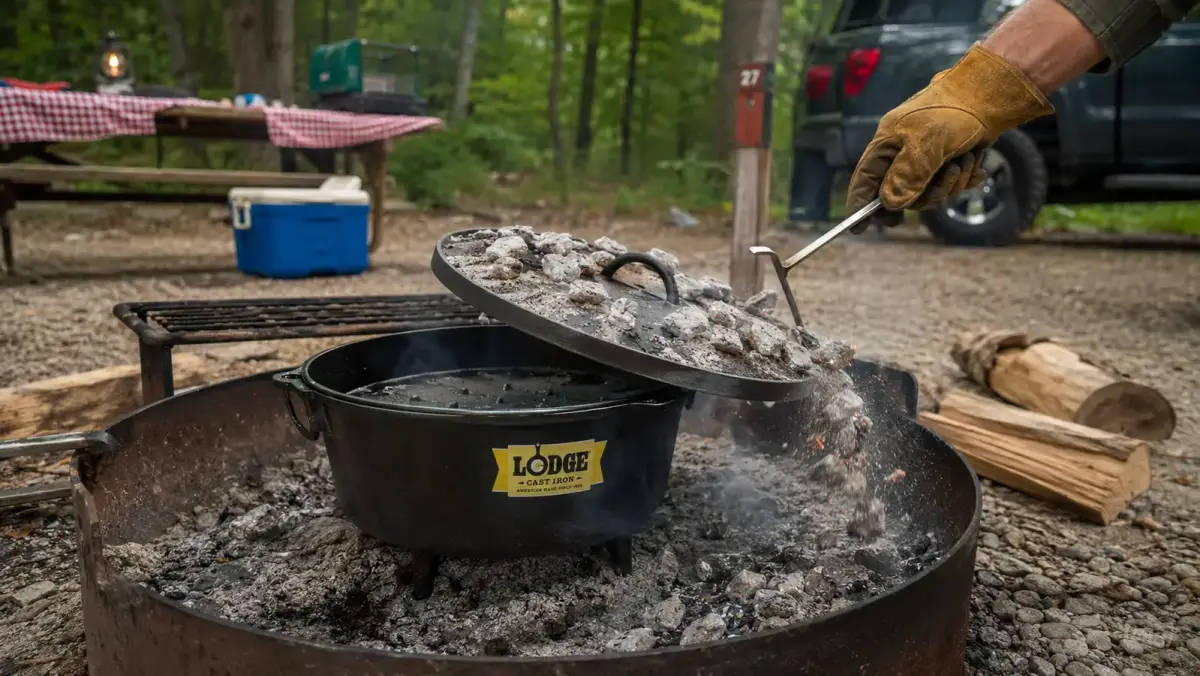
The three legs and the flanged lid are the whole reason this style of dutch oven exists, and they're the biggest advantage the Lodge has. The legs lift the pot off the coal bed so air and heat can move underneath it evenly, instead of scorching one flat spot. The flanged lid has a raised lip built specifically to hold a scoop of hot coals on top, so you get heat from above and below at the same time, which is how a camp dutch oven bakes a cobbler or browns the top of a casserole without a real oven anywhere in sight. An enameled dutch oven has neither feature, because it was never designed to sit in a fire ring.
Thermal shock is the other big one. I've watched campers pull a dutch oven out of a cold truck bed on a chilly Arkansas morning and set it straight into hot coals to get breakfast going before the loop woke up. Bare cast iron shrugs that off. Enamel doesn't. The coating and the iron underneath it expand at different rates when the heat hits fast and unevenly, and that mismatch is exactly what causes enamel to crack or craze, sometimes on the first trip, sometimes a season or two in. I've seen it happen to a perfectly nice enameled dutch oven that someone brought out to the fire ring because it was the only one they owned.
The Lodge also just takes a beating better. I've watched this style of cast iron dutch oven get set down hard on a rock fire ring edge, get scraped with a metal spatula, and get left sitting in coals longer than it should have been, and none of that hurt it in any way that mattered. Worst case, a spot of seasoning wears thin and you re-oil it. Cast iron doesn't crack from a hard knock the way enamel does, and at a real campsite, hard knocks happen more than anyone plans for.
Where the Enameled Dutch Oven Wins
I'll give the enameled dutch oven its due, because it earns every bit of it in the right setting. In a home kitchen, it's the better tool, plain and simple. There's no seasoning to build or maintain, no re-oiling after every wash, and no worrying about a metallic taste creeping into a tomato sauce or a wine-based braise the way bare cast iron can if the seasoning isn't solid. You can hand it a dishwasher on most models, wipe it clean in thirty seconds, and it still looks good enough to set right on the dinner table.
It also looks the part in a way a working camp dutch oven never will. An enameled dutch oven comes in a real color, holds a shine, and goes from stovetop to oven to table without anyone thinking twice about it sitting there. If what you're cooking is mostly on a stove or in a conventional oven at home, and you never plan to set the pot in coals, that glossy coating stops being a liability and becomes a genuine advantage. Acidic dishes especially favor it. Tomato-based chili, wine reductions, anything that would sit in a bare cast iron pot for hours comes out cleaner and without any hint of metal in an enameled one.
Tired of a dutch oven that can't handle real coals?
The Lodge Cast Iron Camp Dutch Oven is pre-seasoned, built with legs and a flanged lid for direct coal cooking, and it won't crack from thermal shock the way an enameled pot can. Check today's price on Amazon before your next trip.
Amazon Check Today's Price on Amazon →What Direct Coals Actually Do to Each One
This is the part of the comparison that matters most if you're deciding between the two for a camping trip specifically. Direct coal contact is a different kind of stress than a stovetop burner. A burner heats evenly and gradually. Coals are uneven, they run hotter in spots, and the moment you're baking anything, you're stacking more coals directly on the lid, doubling the heat exposure on a piece of cookware that was never built to handle it from both sides at once if it's enameled.
I've watched the failure happen in real time on my loop. It's rarely dramatic, no explosion, no dramatic crack you hear across the campground. It's usually a quiet spiderweb of hairline cracks in the enamel that shows up the next time the owner looks closely, sometimes with a little chip missing where a coal sat directly against the coating. Once that happens, the enamel's whole advantage is gone, because now you've got exposed cast iron underneath an uneven, chipped coating, which is the worst of both worlds. The Lodge dutch oven never has that problem because there's no coating to fail in the first place. What you see on day one, bare seasoned iron, is what you're still cooking on years later.
Seasoning, Cleaning, and Care
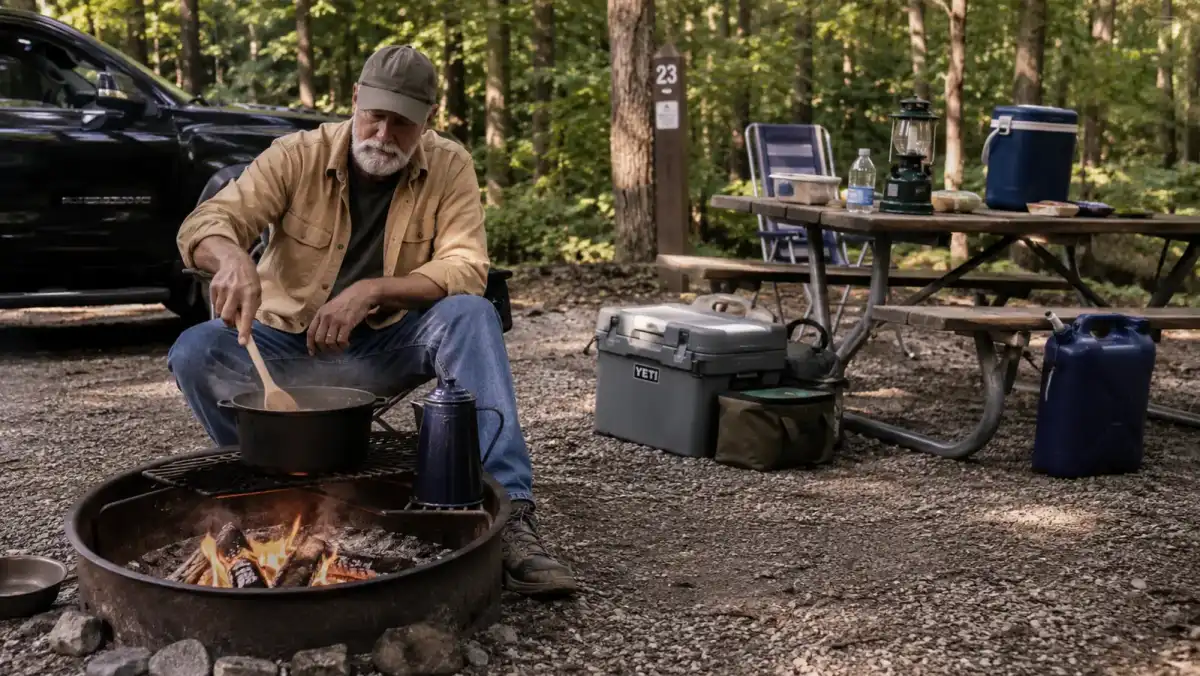
The Lodge comes pre-seasoned out of the box, which surprises some first-time buyers who expect to have to season it themselves before the first use. It's ready to cook on day one, but that seasoning builds and improves with every meal you cook in it, which is the opposite of how most cookware ages. Care is simple but it isn't zero effort. Hand wash it, dry it completely and quickly so it doesn't rust, and rub a light coat of oil into the surface before you pack it away. Skip that last step and leave it damp in a tote for a couple weeks, and you'll open it to surface rust. I've seen it happen to campers on my loop more than once, and it's an easy fix, a scrub pad and a fresh seasoning session, but it's a step you can't skip.
The enameled dutch oven asks for almost none of that. There's no seasoning to maintain, no risk of rust on the cooking surface, and cleanup is closer to washing any other pot. That lower-maintenance profile is a real reason people default to enamel for everyday kitchen use. The tradeoff, and it's the whole point of this comparison, is that the coating that makes it so easy to live with in a kitchen is the same coating that can't take what a campfire dishes out. Easy care at home and durability over open coals turned out, in everything I've watched over nine seasons, to be a tradeoff you don't get to skip past.
Who Should Buy Which
If you're cooking over an actual campfire, coals in a fire ring or a dedicated coal bed, the Lodge Cast Iron Camp Dutch Oven is the right tool and it isn't a close call. The legs, the flanged lid, and the resistance to thermal shock exist specifically for that kind of cooking, and an enameled dutch oven simply wasn't built to survive it long term. If you want a deeper look at how this exact dutch oven performs over a full season of use beyond just this one comparison, I put together a full-season review of the Lodge camp dutch oven covering the seasoning, the weight, and how it travels in the bed of my Tacoma.
If most of your cooking happens on a stovetop or in a home oven and the campfire dutch oven only comes out once or twice a summer, an enameled version still has a real place in your kitchen, and I'm not going to talk anyone out of owning one. What I will tell you, after watching a season's worth of cracked enamel come off my loop's fire rings, is that the two pots aren't interchangeable no matter how similar they look on a store shelf. If campfire cooking is even part of the plan, bare cast iron is the one that's still going to be working when the enameled version has a hairline crack running through it. For more reasons this style of dutch oven earns its keep at a real campsite, I've also laid out a list of what makes a cast iron camp dutch oven worth carrying.
Ready for a dutch oven built for actual coals, not just a stovetop?
After watching enameled pots crack over campfire coals on my own loop, the Lodge Cast Iron Camp Dutch Oven is the one I'd point you toward for real campsite cooking. Check today's price on Amazon and see if it's in stock for your next trip.
Amazon Check Today's Price on Amazon →