
Somewhere around my sixth season hosting, a camper two sites down from mine dragged a brand new portable power station out of his truck bed, plugged in a small window air conditioner, and watched the whole setup shut off in under four minutes. He wasn't a dummy. He'd read 293 watt-hours on the box and figured that sounded like plenty of power. That's the gap I want to talk about before I say another word about the Jackery Explorer 300 Portable Power Station, because it's the single biggest reason units like this get returned, and almost nobody selling them explains it plainly.
I've already run this exact Jackery Explorer 300 through a full camping season, plugging phones, a lantern, and my CPAP machine into it night after night at my host site on Loop B. I wrote up how it held up over months of daily use in a full season review if you want that side of it. This article is different. This is what I didn't tell you there, the stuff that only shows up once you've lived with a unit like this for a while, and watched dozens of other campers make the same assumptions I almost made myself.
The Quick Verdict
A well-built, honestly rated small power station that does exactly what a 293Wh LiFePO4 battery is capable of doing, no more. Nearly every disappointed owner I've talked to bought it to do a job it was never built for.
Amazon Check Today's Price →Before you buy a power station to run your fridge, read this first.
The Jackery Explorer 300 will keep your phone, lantern, and CPAP running for days. It will not run a window AC unit or a full-size fridge, and knowing that before you buy saves you a return shipping label. Check today's price on Amazon and decide with the real numbers in front of you.
Amazon Check Today's Price on Amazon →How I've Used It
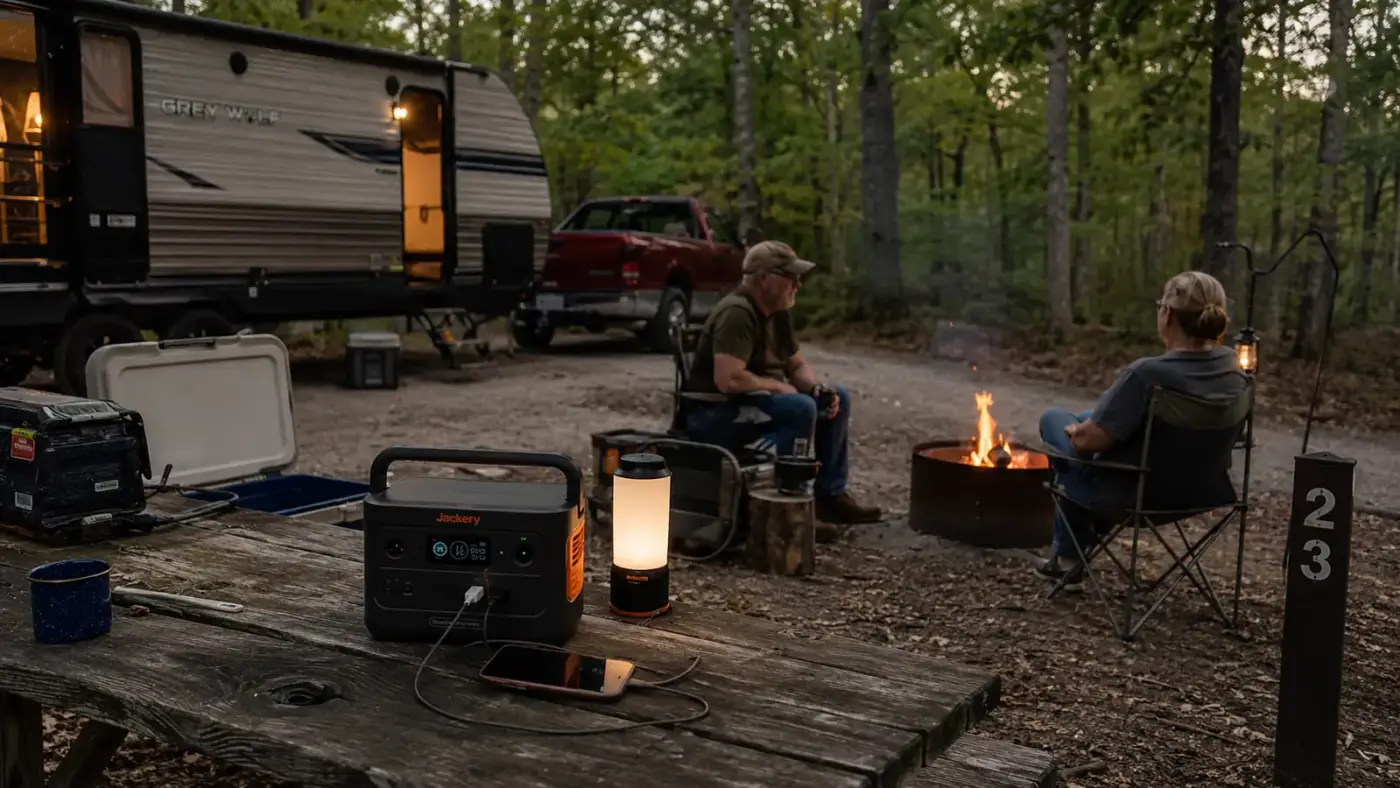
My unit lived on the dinette bench of my 22-foot travel trailer for most of a season, April through October, and it came out to the picnic table most evenings once the sun went down. I used it to keep my phone charged for the radio app I ran during evening rounds, to run a small LED lantern at the fire ring, and most nights to run my CPAP machine without the heated humidifier, which is the setting that keeps it well inside what this unit can handle.
Because I walked the loop at dusk and checked roughly forty occupied campsites a night, I saw a lot of other power stations too, several of them this same Jackery model, plugged into everything from string lights to a portable ice maker to, in one memorable case, a full-size dorm fridge somebody hauled from home. That range of use is where this review comes from. Not one camper's week, but a season of watching what this size of battery is actually asked to do at a real campsite.
What follows isn't a spec sheet rewrite. It's the honest gap between what a 293 watt-hour number sounds like it should do and what it actually does, plus the things I only figured out myself around month three of owning mine.
The Watt-Hour Number Everyone Misreads
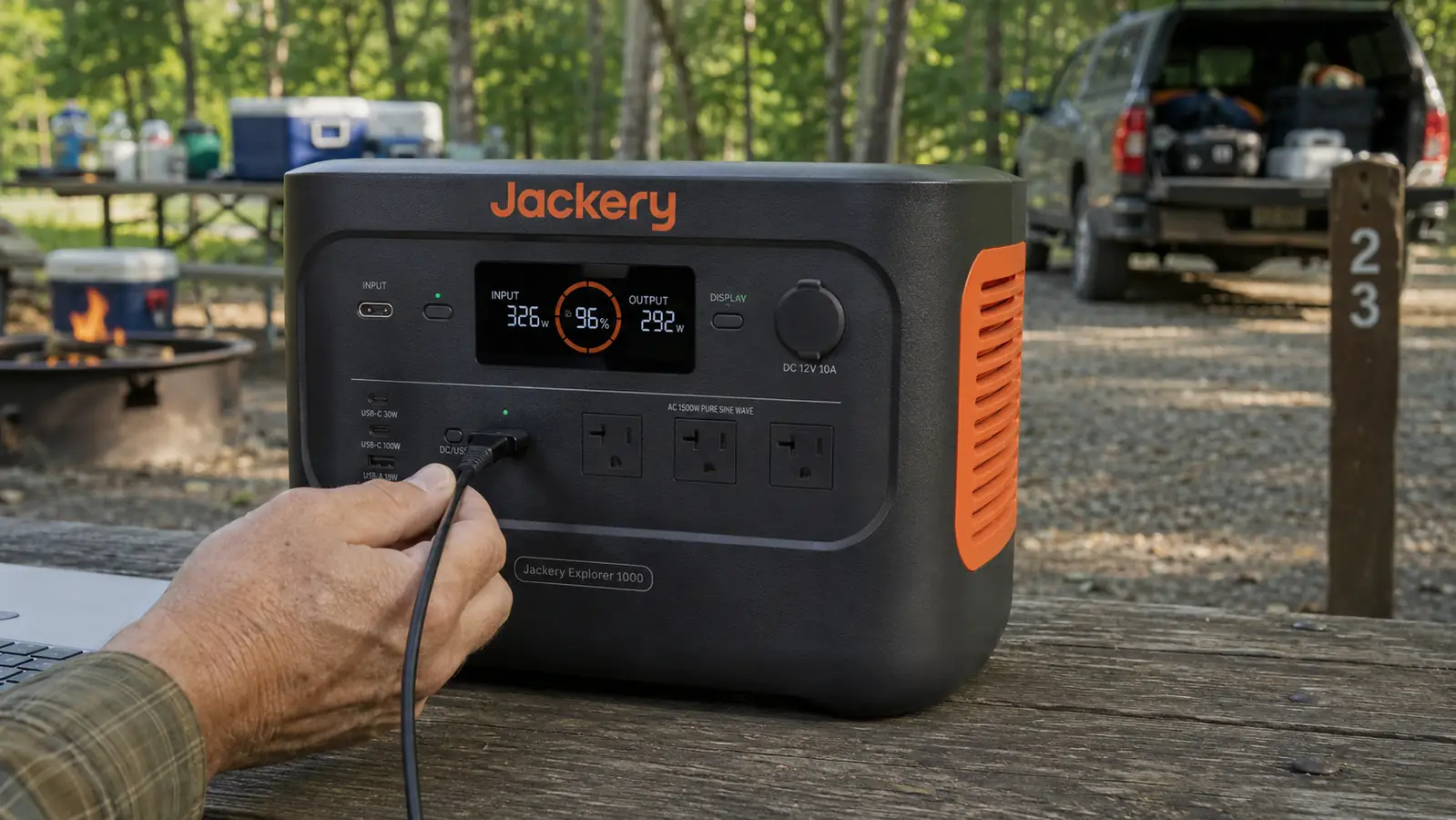
Watt-hours measure total stored energy, not the rate you can pull it out. This Jackery Explorer 300 stores 293Wh, but it can only push out 300 watts continuously, with a 600 watt surge for a few seconds when something first kicks on. That second number, not the watt-hour figure printed in bold on the listing, is what decides whether your device works at all. If what you're plugging in draws more than 300 watts running, or spikes past 600 watts on startup, this unit shuts itself off to protect the battery. That's what happened to my neighbor's window AC in under four minutes.
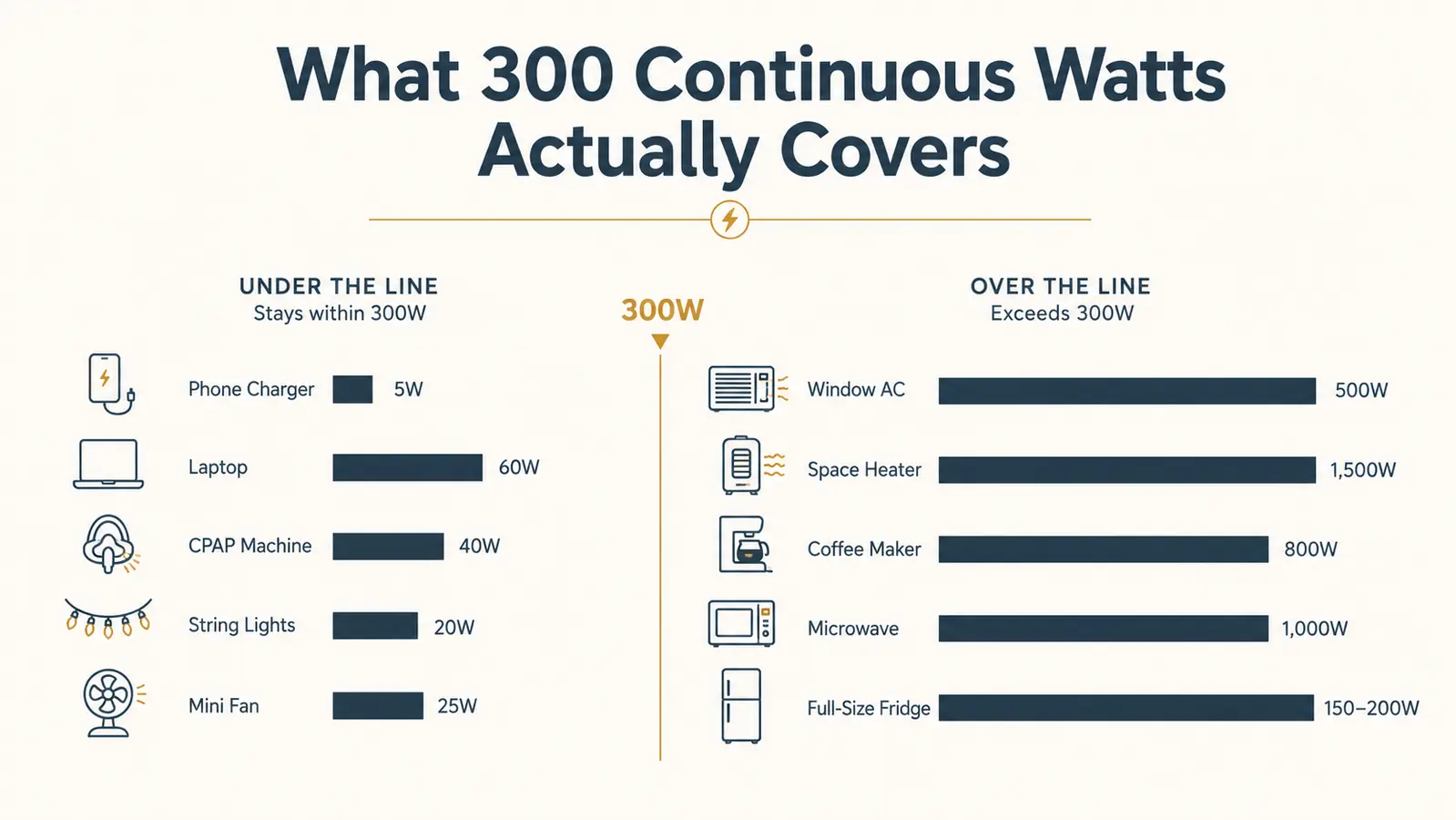
Here's the appliance list that I've now watched fail on this size of power station more than once at my campground: a full-size fridge, which needs a hard startup surge that can spike well past 600 watts even though it idles low. A window or portable air conditioner, most of which draw 900 to 1,500 running watts before you even count the startup spike. A space heater, which runs 1,200 to 1,500 watts almost across the board. Any coffee maker with a heating element, typically 800 to 1,200 watts, brews for a minute and then trips the unit. And most microwaves, which draw 600 to 1,200 watts depending on size, right at or past the ceiling.
None of that is a defect. It's just physics that the marketing copy doesn't spell out, because 293 watt-hours sounds bigger than 300 continuous watts feels. I'd rather tell you plainly, before you buy this expecting to run your coffee maker on a cold morning and finding out the hard way that you can't.
What It Actually Runs Well
Inside the 300 watt ceiling, this thing is genuinely useful, and I don't want the watt-hour gap to make it sound like a disappointment across the board. Phones and tablets pull almost nothing, single-digit watts, and I got dozens of full charges out of one battery cycle. A laptop drawing 45 to 65 watts through the USB-C port ran for hours without touching a wall outlet. My CPAP without the heated humidifier drew low enough that I got four to five full nights out of one charge, which is the number that actually matters to me.
String lights, a small camp fan, a Bluetooth speaker, a drone battery charger, a camera battery charger, a portable air pump for the kids' float toys, all of it sat comfortably under the limit and ran for the better part of a weekend on one charge. If your camping setup is built around small electronics and not heating or cooling appliances, this battery covers a real campsite's worth of needs without you ever thinking about the wattage ceiling at all.
Recharge Time Isn't One Number
The box lists a recharge time, and I'll say upfront that the number on the packaging assumes the best-case method, plugged straight into a full-power wall outlet with the included AC adapter. In that setup, mine went from near empty to full in a little over five hours, which held up close to what's advertised. That's not how most campers actually recharge it, though.
Charging off a vehicle's 12-volt outlet takes noticeably longer in real use, closer to six hours in my experience, and it competes with whatever else is drawing off your truck's electrical system while the engine's off. Solar recharging is where the gap between the marketed number and reality gets widest. On a clear October afternoon with a dedicated solar panel angled right, I got close to the advertised time. On an overcast day, or with the panel propped against a cooler instead of properly angled, I've watched it take nearly twice as long. If you're planning to rely on solar as your only recharge method on a multi-day trip, plan for the slow day, not the sales page day.
The unit does support pass-through charging, meaning you can run something off it while it's plugged in and charging at the same time. I used this more than once during a rainy weekend, keeping a lantern running off the battery while it topped up from the trailer's outlet overnight. It works, but I noticed the case runs noticeably warmer doing both at once, and I don't run it that way longer than I have to. Heat is the one thing that shortens a lithium battery's life faster than anything else.
The Month Three Discoveries
The first thing I didn't expect showed up around week ten, a stretch of unusually hot July afternoons where I'd left the unit in the closed bed of my Tacoma between uses. It got hot to the touch, and the display briefly threw a temperature warning before I moved it into the shade. LiFePO4 batteries like this one are more heat-tolerant than older lithium-ion packs, but a black plastic case sitting in direct Arkansas sun in a closed truck bed will still get hotter than you'd guess, and I now make a point of keeping mine in the cab or under the canopy instead.
The second discovery was runtime loss from running two things at once. Charging my phone and running the lantern simultaneously ate into the battery noticeably faster than either device alone would suggest, because every watt that passes through the inverter loses a slice to heat in the conversion from stored DC power to the AC power most plugs need. That loss is normal for any power station like this, but nobody mentions it on the listing, and it means the real-world runtime for mixed use runs a bit under what you'd calculate by simply adding up device wattages.
The third thing, and this one surprised me most, is that cold mornings slow the charging rate down. On a 38 degree October morning at my host site, plugging it in to recharge took visibly longer to climb than it had in August. I started bringing it inside the trailer to charge overnight once the season turned cold, rather than leaving it plugged in outside, and it charged at the rate I expected once it warmed up.
Who Returns This Thing, and Why
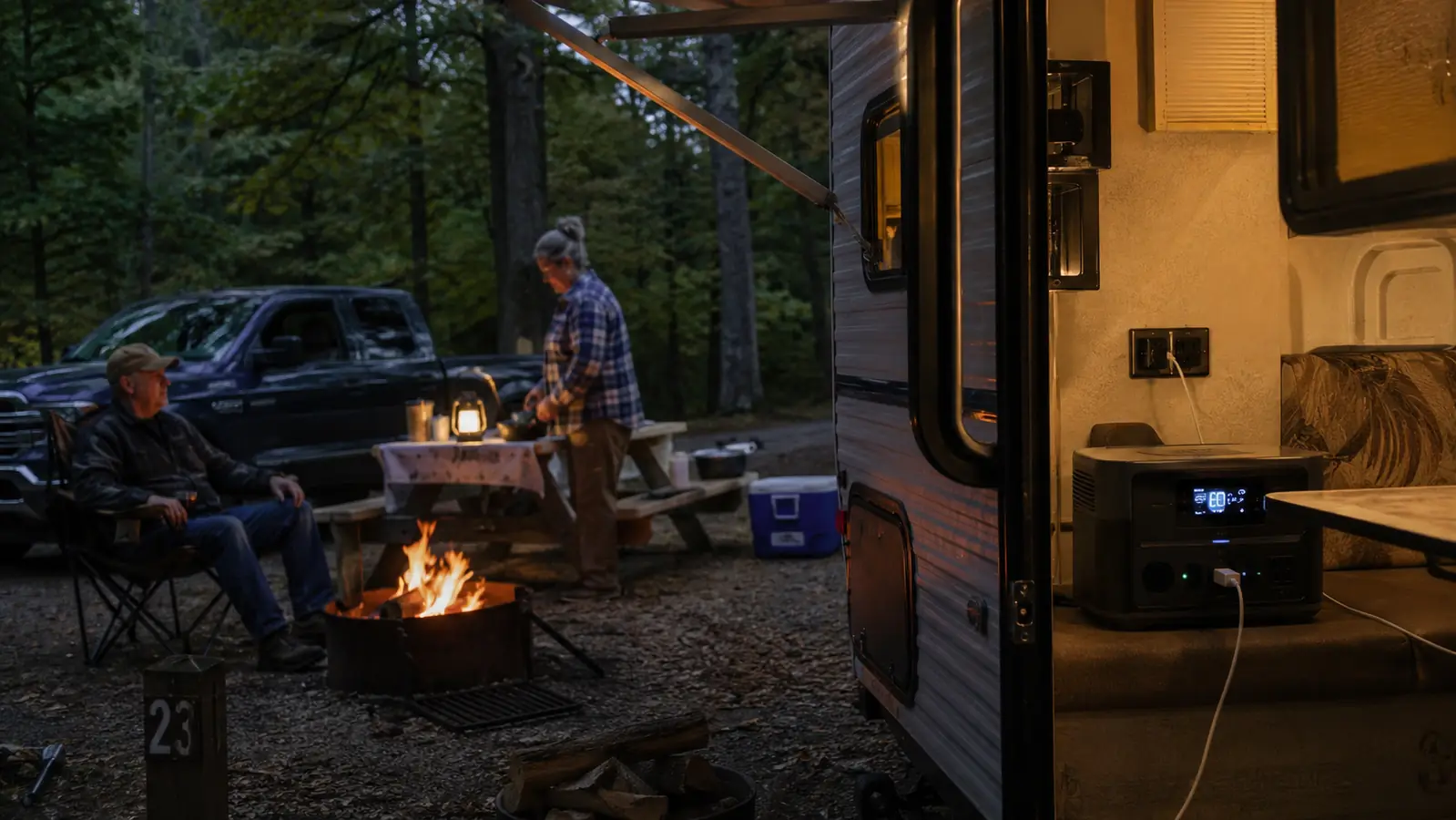
I've talked to enough campers on my loop who bought one of these to see the pattern in who ends up disappointed. It's almost always someone who bought it to replace something bigger, a generator for running a window AC in a hot tent, a way to keep a full-size cooler-style fridge cold for a week without ice, or backup heat for an unexpected cold snap. Every one of those is a real need, and every one of those is outside what a 300 watt, 293 watt-hour unit was built to do. That's not this unit failing. That's a mismatch between the job and the tool, and it's an easy mistake to make when the box just says a big watt-hour number and doesn't spell out the wattage ceiling next to it in plain language.
The campers I've seen keep theirs for years bought it for exactly what it does well: charging phones and small electronics, running a CPAP without a heated humidifier, keeping lights on during a power outage at home, or backing up a small 12-volt cooler that draws well under the limit. If that's your actual use case, this unit earns its keep. If you're picturing it running your kitchen appliances at camp, read the wattage number on your appliance before you buy, not just the watt-hour number on this box.
What I Liked
- Honestly rated for what a 293Wh LiFePO4 battery and 300 continuous watts can actually deliver
- Handles phones, laptops, a CPAP without heated humidifier, and small electronics for days on one charge
- Supports pass-through charging so you can run a light while it recharges overnight
- Compact and light enough to keep inside a trailer or truck cab rather than exposed to heat
- LED display shows real watts in and out, so you can see the ceiling coming instead of guessing
Where It Falls Short
- Cannot run a window AC, space heater, heating-element coffee maker, most microwaves, or a full-size fridge
- Advertised recharge times assume ideal conditions, real solar and car charging both run slower
- Running two devices at once drains it faster than simple addition would suggest, due to inverter loss
- Charging rate slows noticeably in cold weather, and heat exposure in a closed vehicle shortens battery life over time
The watt-hour number on the box is real. It's just not the number that decides whether your coffee maker turns on. That gap is where almost every disappointed owner I've met got tripped up.
Who This Is For
This unit is built for campers whose power needs are phones, lights, a laptop, a CPAP without a heated humidifier, and small electronics, the kind of load that adds up to a few hundred watts across an evening, not a kitchen's worth of appliances. If you camp the way I hosted, staying in one spot for days at a time with access to keep it charged overnight, its size and weight are non-issues and its limits rarely come up because you were never asking it to do more than it's built for.
Who Should Skip It
If your plan is to run a window AC unit, a space heater, a full-size fridge, or a coffee maker with a heating element, this size of power station will disappoint you no matter how good the reviews look, because the math simply doesn't work at 300 continuous watts. That's not a knock on this unit, it's a mismatch you can avoid by checking the running wattage printed on your appliance before you buy. I put together a full comparison against a gas generator for anyone whose camp setup genuinely needs that kind of power, since a generator, not a bigger battery, is usually the honest answer at that point.
Know exactly what it can run before it shows up at your site.
If your camping power needs are phones, lights, a laptop, and a CPAP, not a kitchen's worth of appliances, the Jackery Explorer 300 does that job well and honestly. Check today's price on Amazon and match it against what you actually plan to plug in.
Amazon Check Today's Price on Amazon →