
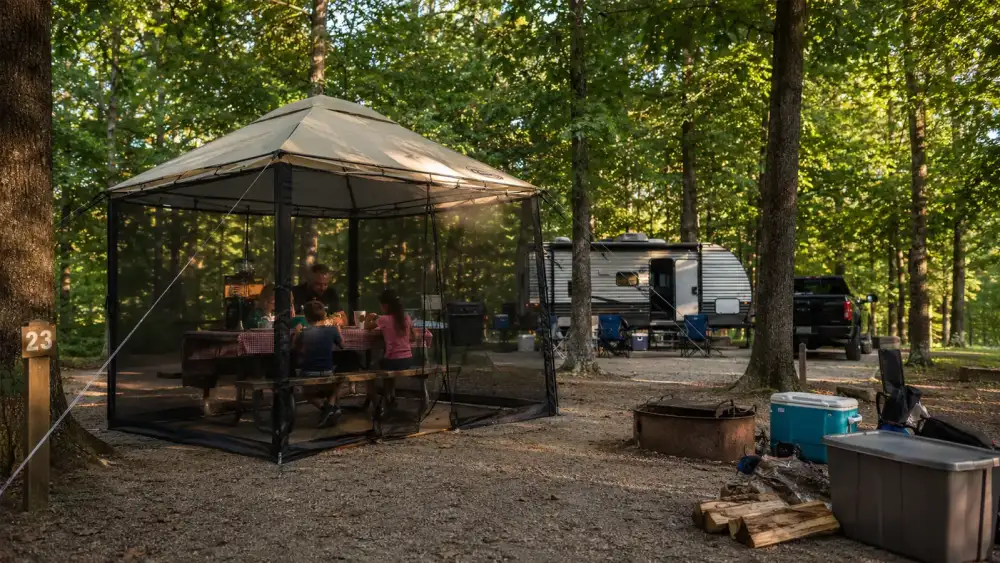
I have watched a lot of campsite dinners get cut short. Not by rain, not by cold, by bugs. Nine seasons walking the loop at dusk, checking roughly forty occupied campsites a night at an Ozarks state park in northern Arkansas, and bug season is the one thing that empties a picnic table faster than anything else. You can layer up for cold. You can duck under an awning for rain. Gnats and mosquitoes just win, night after night, unless you put a real barrier between your dinner and the tree line.
That's why I bought the Alvantor Pop Up Screen House Tent for my own host site on Loop B, the spring after I'd watched three different families set one up within two weeks of each other and never heard a single bug complaint out of any of them the rest of the season. Mine went up in April outside my 22-foot travel trailer and came down for the last time in October. I've used it through a full season of dinners, morning coffee, and more than a few afternoons hiding from direct sun, and I've watched a dozen more of these pop up around Loop B over the years, some handled well and at least two that ended up in a heap against a picnic table after a wind gust nobody staked for.
The Quick Verdict
A genuinely effective bug barrier and shade structure that holds up well once you commit to staking and guying it properly, but it demands real wind discipline, some patience folding it back into its bag, and it is not, and never will be, a rain shelter.
Amazon Check Today's Price →Tired of bugs ending your campsite dinner before dessert?
The Alvantor Pop Up Screen House Tent puts fine mosquito netting and UPF 50+ shade between your picnic table and the tree line, and it pops open in seconds. Check today's price on Amazon before your next trip.
Amazon Check Today's Price on Amazon →How I've Used It
I didn't set this up for one weekend and call it reviewed. It went up outside my trailer door in April and mostly stayed up through October, moved only a handful of times when I needed to mow under it or when a real storm system was coming through and I wanted it down rather than tested. My picnic table lived inside it most nights, and it turned into the spot where I ate dinner, did paperwork, and sat out a couple of drizzly afternoons that weren't heavy enough to send me back inside the trailer.
Because I walked the loop at dusk and checked roughly forty occupied campsites a night, I also watched this exact screen house, and pop ups like it, in other people's hands across several seasons. I watched one survive a genuinely rough thunderstorm because the family staked all four corners and ran the guy lines tight the day they arrived. I watched another one, a similar pop up rather than this exact model, get lifted clean off a picnic table and roll thirty feet down a gravel site because nobody staked it at all. That's the range of outcomes with this kind of shelter, and it comes down almost entirely to whether the owner treats staking as optional.
I want to be upfront about what this is and isn't. This is a bug and sun shelter, not a rain shelter and not a four-season structure. It sheds a light shower fine. It is not built to stand up to a real downpour or a hard wind event, and if you buy it expecting that, you'll be disappointed. If you camp somewhere with regular severe weather and need a true rain shelter, this review isn't going to talk you into buying one for that purpose, and neither should the product listing.
Wind Is the Real Enemy, Not Rain
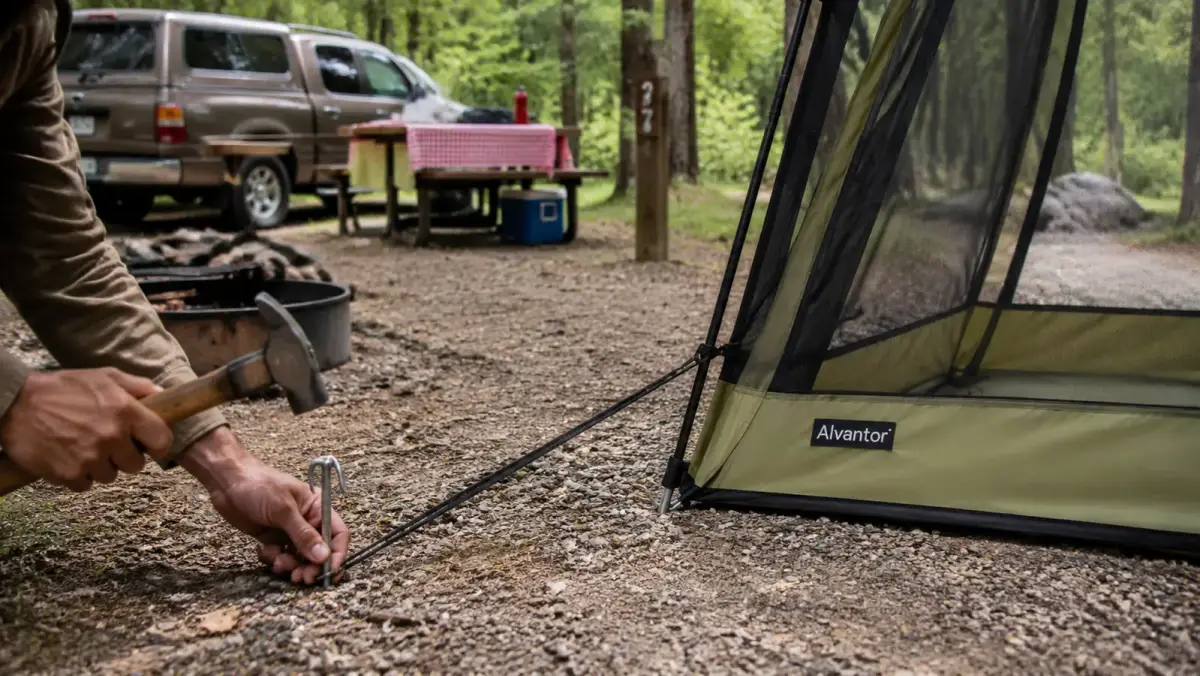
If there's one thing I want every reader to take from this review, it's this: a pop up screen house like this Alvantor is a sail with legs. The mesh walls let wind through fine, but the solid roof panel catches enough of it that an unstaked screen house will tip, cartwheel, or fully launch off a site in a stiff gust. I've seen it happen with this brand of pop up and with cheaper knockoffs, and it is never a small, easy-to-fix mess when it happens. Frame poles bend. Netting tears on gravel. Sometimes it takes out a neighbor's canopy on the way.
The screen house ships with ground stakes and guy line loops sewn into all four corners, and using every one of them the first time you set up is not optional in my book, even on a calm-looking evening. Ozark weather turns fast, and I've watched a clear supper hour become a 30 mile an hour gust front in the time it takes to clear plates. My routine became automatic: all four corner stakes in the ground before I ever put anything on the table underneath, guy lines pulled snug, not just loosely clipped.
On nights when the forecast called for real wind, I added sandbags to the base of each leg, which the frame's leg loops accept easily. That extra step turned a screen house I would otherwise have worried about into one I trusted enough to leave up overnight. I never lost mine to wind in a full season, and the two failures I watched at other campsites both traced back to the same thing: someone set it up fast at the end of a long drive and skipped the stakes because they figured they'd only be gone a few hours.
The Mesh Netting and UPF 50+ Roof
The actual job this thing has to do, keeping bugs out and sun off, it does well. The mesh on all four walls is fine enough to stop gnats, not just mosquitoes, which matters more than people expect in the Ozarks in June and July when gnats are the worse problem some evenings. Zippered mesh doors on opposing sides let you walk in and out without leaving a gap, and after a full season of use, morning and evening, none of the zippers failed and none of the mesh tore, even with a dog running in and out most nights at my neighbor's site who was borrowing mine for a stretch after his own tent screen ripped.
The solid roof panel is rated UPF 50+, and I noticed the difference immediately compared to sitting at an open picnic table. Midday shade under the screen house was genuinely cooler, not just shaded, and I used it as my go-to spot for afternoon paperwork rather than sitting in the trailer with the AC running, which saved propane and battery over the season. If you're deciding between this and a plain dining fly tarp for shade purposes only, I wrote a full side-by-side comparison against a dining fly tarp that gets into which one wins for which kind of trip.
The one weather-related complaint worth mentioning here is condensation. On cool, humid mornings the solid roof panel would collect a layer of dew or light condensation on the underside, and it needed a shake-out or a quick wipe before I sat under it for coffee. Not a real flaw, just something nobody mentions until they own one.
Setup, Takedown, and Folding It Back Into the Bag
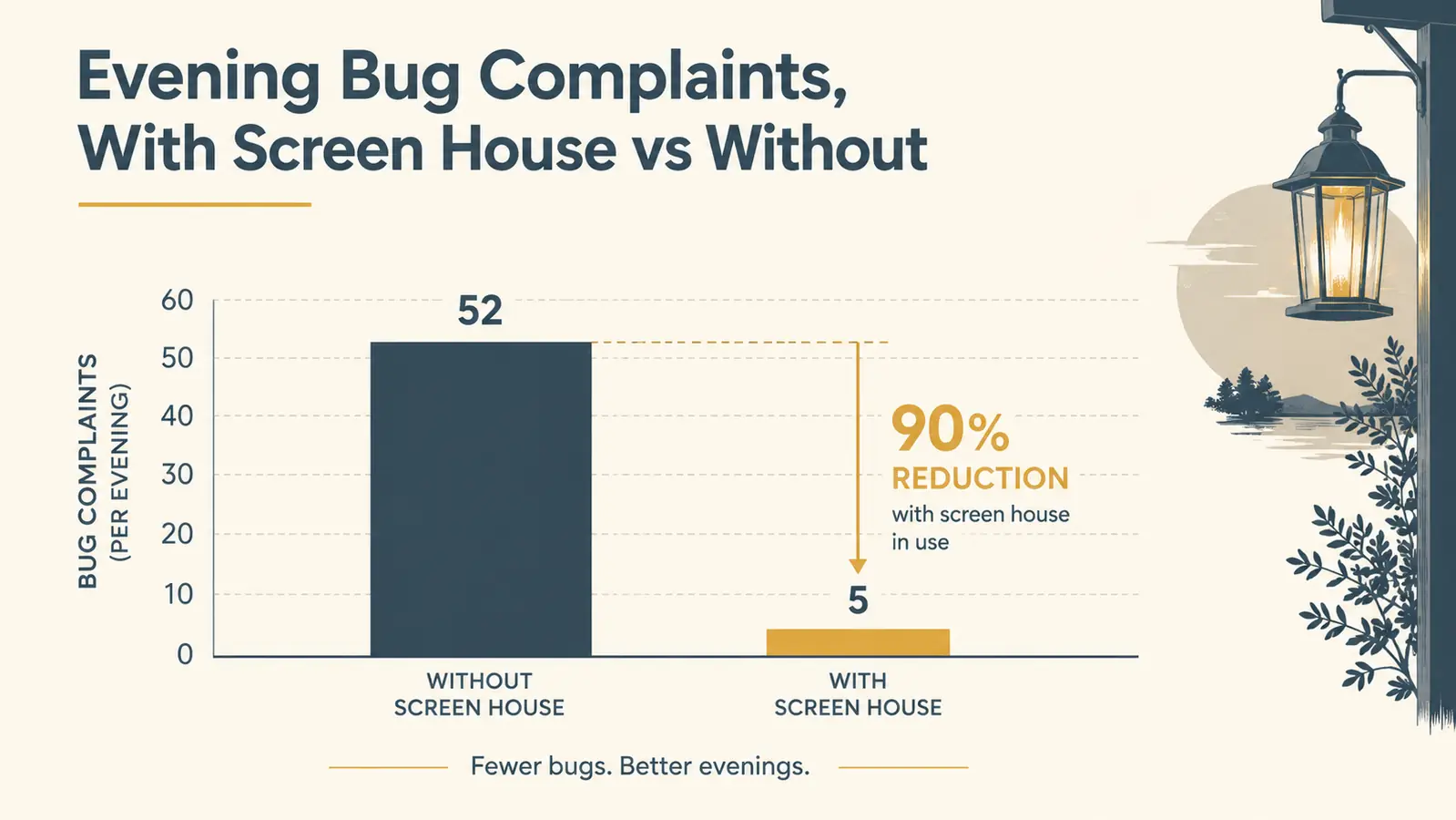
Setup on this screen house is the easy part and Alvantor markets it honestly. You unzip the round carry bag, pull the folded frame out, and give it a firm outward pull, and the whole umbrella-style pop up frame snaps into shape in a few seconds. I had mine standing in under two minutes the first time, stakes and guy lines included, and that never got slower over the season.
Folding it back down is where almost everyone I've watched struggles, myself included the first two times. This isn't a simple reverse of the setup motion. You have to collapse the frame, then twist it into a figure-eight shape before it will compress small enough to slide back into its round bag, and if you try to force it straight down without that twist, you'll fight it for ten minutes and possibly bend a pole. It took me watching a video and one failed attempt on my own before I got the motion down, and after that it became routine, maybe ninety seconds once I had it.
I've watched at least four different campers on my loop over the years stand in their site fighting a pop up screen house back into its bag at checkout time, sometimes for fifteen or twenty minutes, sometimes giving up and cramming it in half-folded, which stresses the frame joints and shortens its life. My honest advice, and this applies to any pop up shelter, not just this one: learn the twist motion at home in your yard before your first camping trip, not for the first time at a campsite with your family waiting in the truck.
Where It Struggled
No shelter earns a perfect score from me, and this one has real limits worth knowing before you buy. The biggest one, already covered, is that this is not a rain shelter. A light shower is fine. A real downpour will pool water on the flat sections of the roof panel and eventually find a seam to leak through, and I brought mine down more than once when a real storm system was forecast rather than trust it to hold.
The second thing is frame durability under repeated wind stress. Mine held up fine over one full season, but I watched a screen house at a neighboring site develop a stress crack at one of the pole joints by its second season of regular use, likely from wind flex over time rather than any single failure. It's a shelter built for shade and bugs, and treating it gently in real wind, staking early and taking it down before a serious storm, extends its life a lot.
The third is storage and hauling bulk. The round carry bag is sizable, close to four feet across when packed, and it takes up real space in a truck bed or trunk alongside a cooler and folding chairs. It's not a small item, and if you're tight on packing space in a compact SUV, you'll want to measure your trunk before you buy. For a more blunt rundown of every tradeoff, including a few I'm still weighing after a full season, I put together a separate honest review covering what nobody tells you about this screen house.
What I Liked
- Fine mesh netting genuinely stops gnats and mosquitoes, not just larger bugs, and held up all season without tearing
- UPF 50+ roof provides real, noticeable shade, cooler than sitting in the open
- Pops open in under two minutes with stakes and guy lines included
- Sturdy once properly staked and guyed, rode out multiple wind events without shifting
- Zippered doors on opposing sides make walking in and out easy without leaving gaps for bugs
Where It Falls Short
- Not a rain shelter, will pool and eventually leak in a real downpour
- Folding it back into the bag requires learning a figure-eight twist motion, frustrating the first time
- Bulky packed size, close to four feet across, eats real truck bed or trunk space
- Must be staked and guyed every time, skipping that step risks the whole structure tipping or launching in wind
- Frame joints can develop stress cracks over repeated seasons of wind flex if not taken down before serious storms
I have watched wind take a screen house thirty feet across a gravel site because nobody staked it. Mine never moved, because I staked all four corners every single time, no exceptions.
Who This Is For
This screen house is a strong fit for car campers and campground campers who eat outside regularly and are tired of losing dinner to bugs, especially anyone camping in gnat or mosquito-heavy country during peak summer. It's a good match for families who set up at one site for several days or a full week, since the payoff for staking it correctly and living with it grows the longer it stays up. If you camp the way I hosted, staying put at one site with a picnic table you use daily, this earns its packed space.
Who Should Skip It
If you camp somewhere with frequent severe weather and need a genuine rain shelter, this isn't it, and no pop up screen house on the market really is. Skip it too if you're backpacking, canoe camping, or working with a compact car where trunk space is already spoken for. It's also not the right buy for a single overnight trip where bugs aren't a real problem, a cheaper mosquito head net or a can of repellent handles that fine without the packing bulk or the staking routine.
Ready to eat dinner outside again without swatting bugs the whole time?
After a full season of daily use at my host site, the Alvantor Pop Up Screen House Tent is the shelter I'd buy again. Check today's price on Amazon and see if it's in stock for your next trip.
Amazon Check Today's Price on Amazon →